
Discover the Science of Sun Protection
Sun Protection: Your Skin's Best Defense Against Premature Aging
The sun gives us warmth, helps our bodies produce vitamin D, and allows us to enjoy the outdoors. However, too much ultraviolet (UV) exposure is the number one cause of premature skin aging and contributes to skin cancer.
Sun protection isn’t about avoiding the sun—it’s about protecting your skin while enjoying life.
Broad Spectrum Protection
Understand the importance of using broad-spectrum sunscreen to guard against both UVA and UVB rays, ensuring comprehensive skin protection.
Is the skin protected?
Whether you’re spending the day at the beach or simply driving to work, your skin is exposed to ultraviolet rays every day.
How Does the Sun Damage Your Skin?
Most people think a sunburn happens because their skin “gets too hot.”
It doesn’t.
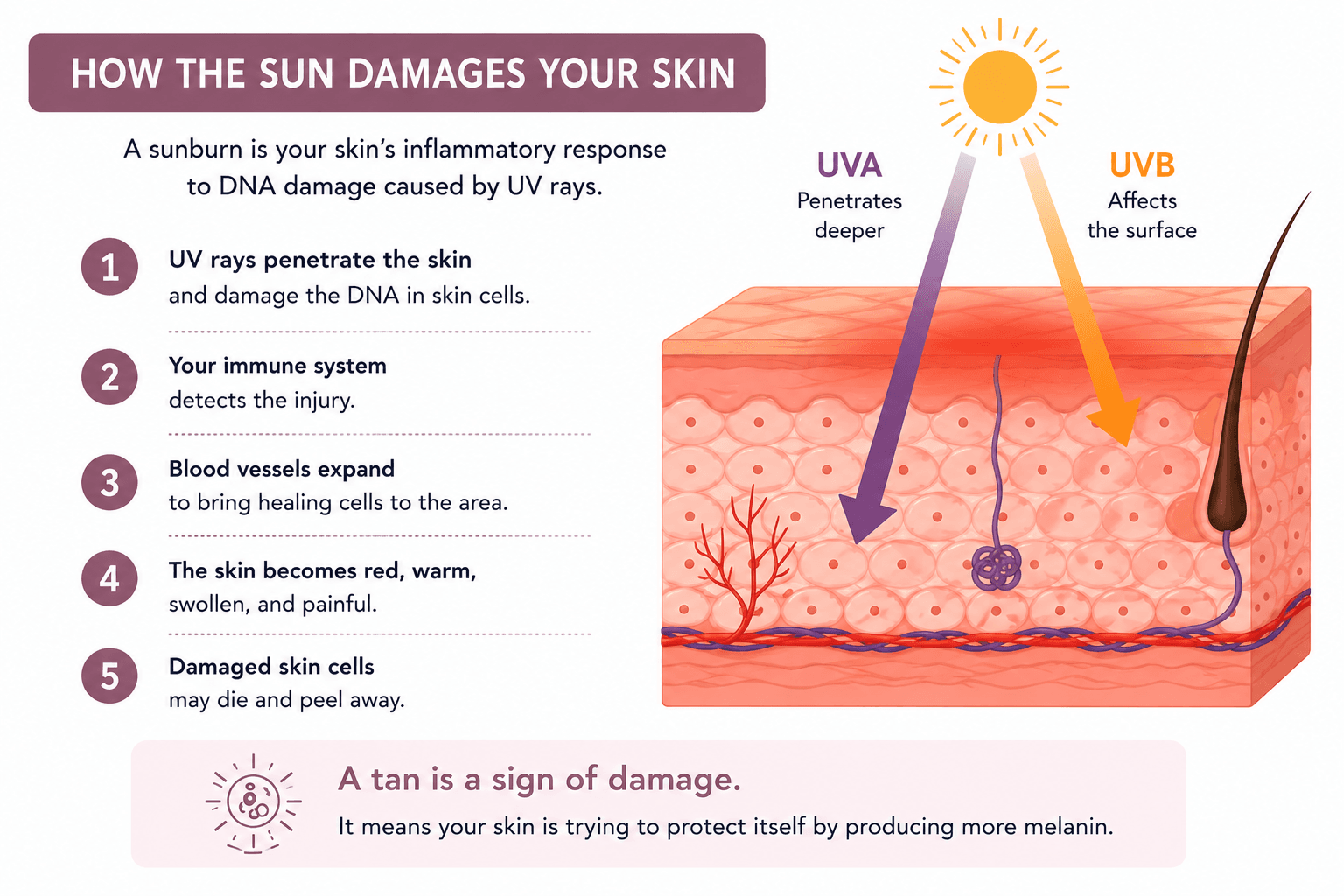
A sunburn is actually your body’s inflammatory response to DNA damage caused by ultraviolet (UV) radiation.
When UV rays penetrate the skin:
- They damage the DNA inside skin cells.
- Your immune system detects the injury.
- Blood vessels expand to bring healing cells to the area.
- The skin becomes red, warm, swollen, and painful.
If enough damage occurs, the injured skin cells die and eventually peel away.
A tan is also a sign that your skin is trying to protect itself. In response to UV exposure, pigment-producing cells called melanocytes make more melanin, which helps absorb some of the incoming UV radiation. While a tan may look healthy, it actually indicates that the skin has already experienced sun damage.
UVA vs. UVB: What's the Difference?
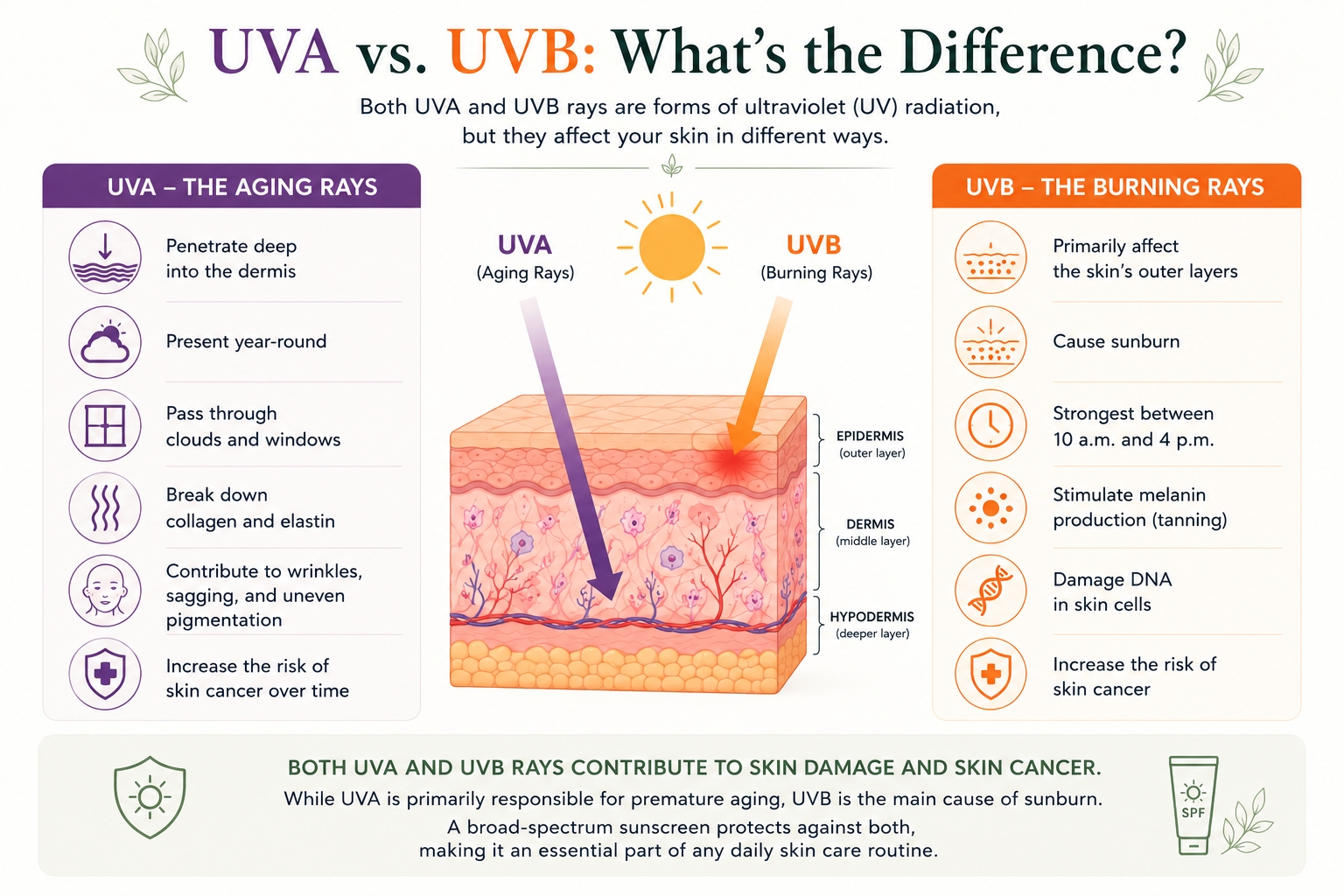
Both UVA and UVB rays are forms of ultraviolet (UV) radiation, but they affect your skin in different ways. Understanding how each type of UV ray works can help you make better decisions about protecting your skin every day.
Then use your infographic.
After the infographic, add these two sections:
UVA – The Aging Rays
- Penetrate deep into the dermis
- Present year-round
- Pass through clouds and windows
- Break down collagen and elastin
- Contribute to wrinkles, sagging, and uneven pigmentation
- Increase the risk of skin cancer over time
UVB – The Burning Rays
- Primarily affect the skin’s outer layers
- Cause sunburn
- Strongest between 10 a.m. and 4 p.m.
- Stimulate melanin production (tanning)
- Damage DNA in skin cells
- Increase the risk of skin cancer
Both UVA and UVB rays contribute to skin damage and skin cancer. While UVA is primarily responsible for premature aging, UVB is the main cause of sunburn. A broad-spectrum sunscreen protects against both, making it an essential part of any daily skin care routine.
Chemical vs. Mineral Sunscreens
One of the most common questions is:
“Which sunscreen is better?”
The truth is that both can be highly effective when used correctly.
Chemical Sunscreens
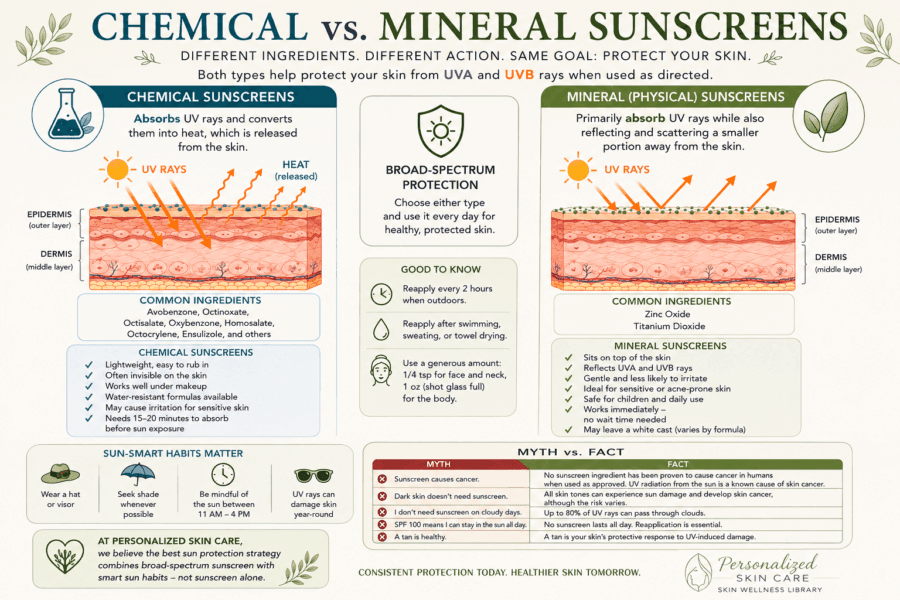
Chemical (also called organic) UV filters absorb ultraviolet energy before it can damage the skin. They convert that energy into a small amount of heat, which is then released.
Common ingredients include:
- Avobenzone
- Octocrylene
- Homosalate
- Octisalate
- Octinoxate
- Uvinul A Plus*
- Uvinul T 150*
- Tinosorb S*
- Tinosorb M*
(*Available in many countries outside the U.S.)
Benefits
✔ Lightweight texture
✔ Blends easily
✔ Leaves little to no white cast
✔ Excellent for everyday wear under makeup
Mineral (Physical) Sunscreens
Mineral sunscreens use naturally occurring mineral ingredients:
- Zinc Oxide
- Titanium Dioxide
For many years, people believed mineral sunscreens worked only by reflecting sunlight like tiny mirrors.
Modern research has shown that this is only partially true.
Most UV protection actually comes from the minerals absorbing UV radiation, while a smaller portion is reflected and scattered away from the skin.
Benefits
✔ Excellent broad-spectrum protection
✔ Less likely to irritate sensitive skin
✔ Often recommended after professional skin treatments
✔ Begins protecting immediately after application
So Which Is Better?
Neither is universally better.
The best sunscreen is the one you enjoy wearing every day.
At Personalized Skin Care, we help clients choose a sunscreen based on:
- Skin type
- Sensitivity
- Lifestyle
- Outdoor activity
- Cosmetic preference
- Skin care goals
SPF: What Does It Really Mean?
SPF stands for Sun Protection Factor. It measures how well a sunscreen protects against UVB rays. Approximate protection:
| SPF | UVB Protection |
|---|---|
| SPF 15 | 93% |
| SPF 30 | 97% |
| SPF 50 | 98% |
| SPF 100 | 99% |
No sunscreen blocks 100% of UV rays.
The difference between SPF 30 and SPF 50 is smaller than many people expect. Proper application and reapplication are often more important than choosing the highest SPF available.
My Professional Perspective on Sunscreen
As an esthetician and a mother, I believe sun protection should be approached with balance, not fear.
Questions about sunscreen safety are common, and ongoing research continues to evaluate certain sunscreen ingredients. While some UV filters can be absorbed through the skin, scientists continue to study what that means for long-term health. At the same time, decades of research clearly show that excessive ultraviolet (UV) exposure damages the skin, accelerates premature aging, and increases the risk of skin cancer.
I often think about family vacations. Spending long days at the beach, swimming, exploring, and participating in outdoor activities significantly increases UV exposure. In those situations, I believe the benefits of using sunscreen to prevent severe sunburn and long-term skin damage outweigh the potential concerns associated with sunscreen ingredients.
Everyday life is different. For most people, daily protection of the face, neck, ears, and other frequently exposed areas is an important part of maintaining healthy skin and helping to prevent premature aging. I also encourage practical sun-smart habits such as wearing a wide-brimmed hat or visor, seeking shade whenever possible, and limiting direct sun exposure during the strongest hours of the day, generally between 11 a.m. and 4 p.m.
At Personalized Skin Care, I don’t believe in one-size-fits-all recommendations. I believe in understanding the risks, considering your lifestyle, and making informed decisions. The best sun protection strategy combines broad-spectrum sunscreen with healthy sun habits to help protect your skin today and for years to come.

Understanding UVA and UVB Rays
UVA rays penetrate deep into the skin, leading to premature aging and wrinkles, while UVB rays primarily affect the surface, causing sunburns. Both types of rays contribute to skin cancer risk. Visualize the impact with our detailed images illustrating how these rays interact with different skin layers.


Healthy skin isn’t achieved by treating damage after it occurs—it’s built through consistent daily care. A personalized skin care routine, combined with broad-spectrum sun protection, helps preserve your skin’s natural beauty and supports healthier-looking skin for years to come.
UVA Rays: The Silent Agers
UVA rays are known for their ability to penetrate deep into the dermis, the skin’s thickest layer. They play a major role in skin aging and wrinkling. Unlike UVB rays, they are present with relatively equal intensity during all daylight hours throughout the year.
UVB Rays: The Burners
UVB rays are the primary cause of sunburn. They damage the skin’s more superficial epidermal layers and play a key role in the development of skin cancer. Their intensity varies by season, location, and time of day.
Protective Measures
Incorporate protective clothing, seek shade, and use a broad-spectrum sunscreen to minimize exposure to harmful rays. Regularly reapply sunscreen, especially after swimming or sweating.
When Should You Reapply Sunscreen?
Even the best sunscreen wears off.
Reapply:
- Every 2 hours outdoors
- After swimming
- After heavy sweating
- After towel drying
Most adults need approximately one ounce (about a shot glass full) to cover the entire body.
For the face and neck, many dermatologists recommend using about two finger lengths of sunscreen.
Daily Sun Protection Tips
Sun protection goes beyond sunscreen.
Protect your skin by:
- Wearing wide-brimmed hats
- Using UV-protective sunglasses
- Seeking shade during peak sun hours
- Wearing UPF clothing when outdoors
- Applying sunscreen every morning—even on cloudy days
- Protecting your neck, ears, chest, and hands
How Professional Skin Care Complements Sun Protection
Professional treatments can help improve the appearance of sun-damaged skin, but they cannot replace daily protection.
At Personalized Skin Care, we combine customized facials, antioxidants, hydration, barrier repair, and corrective treatments to help address:
- Fine lines
- Uneven pigmentation
- Rough texture
- Dehydration
- Loss of radiance
- Early signs of photoaging
The most effective anti-aging treatment isn’t found in a bottle—it’s the sunscreen you apply consistently every day.
Do I need sunscreen if it's cloudy?
Yes. Up to 80% of UV rays can pass through clouds.
Do I need sunscreen indoors?
If you’re near windows or driving frequently, UVA rays can penetrate glass and contribute to premature aging.
Is darker skin protected from the sun?
Melanin provides some natural protection, but all skin tones can experience sun damage, premature aging, pigmentation changes, and skin cancer.
Should I wear sunscreen every day?
Yes. Daily sunscreen is one of the simplest and most effective ways to protect your skin and preserve long-term skin health.
Sun Safety Tips
Comprehensive Guide to Skin Protection
Maintaining skin health requires a proactive approach to sun protection. Apply a broad-spectrum sunscreen with at least SPF 30 daily, even on cloudy days. Wear protective clothing, hats, and sunglasses to shield your skin. Seek shade during peak sun hours, typically between 10 AM and 4 PM. Stay informed about the UV index in your area to plan outdoor activities safely. Remember, consistent protection is key to preventing long-term skin damage and maintaining a youthful complexion.
Top Sunscreen Recommendations
Our #1 Pick
SunGuard Ultra SPF 50
★★★★★

SunGuard Ultra SPF 50 offers broad-spectrum protection against harmful UVA and UVB rays. Its lightweight formula absorbs quickly, leaving no greasy residue, making it ideal for daily use. This sunscreen is enriched with antioxidants to nourish and protect the skin, ensuring a healthy glow.
Pros
- Provides excellent UVA/UVB protection
- Non-greasy and fast-absorbing
- Contains skin-nourishing antioxidants
- Water-resistant for up to 80 minutes
Cons
- May require reapplication after swimming
- Higher price point compared to some alternatives
- Not suitable for very sensitive skin types
AquaShield Daily Defense SPF 30
★★★★☆

AquaShield Daily Defense SPF 30 is perfect for those seeking a hydrating sunscreen. Its formula includes hyaluronic acid, which helps maintain skin moisture while providing effective sun protection. Suitable for all skin types, this sunscreen is a great addition to any skincare routine.
Pros
- Hydrates while protecting from sun damage
- Lightweight and suitable for daily use
- Includes hyaluronic acid for added moisture
- Dermatologist-tested and approved
Cons
- SPF 30 may not be sufficient for prolonged sun exposure
- Requires frequent reapplication
- Limited availability in some regions

Tinted Moisturizer (zinc)
Protect Your Skin Today
Don’t wait to shield your skin from harmful sun exposure. Explore our top-rated sunscreen products and ensure your skin stays healthy and radiant. Whether you’re planning a day at the beach or a walk in the park, our carefully selected sunscreens offer the protection you need. Visit our store or book a consultation with our experts to find the perfect sunscreen for your skin type.

Ultra lite