
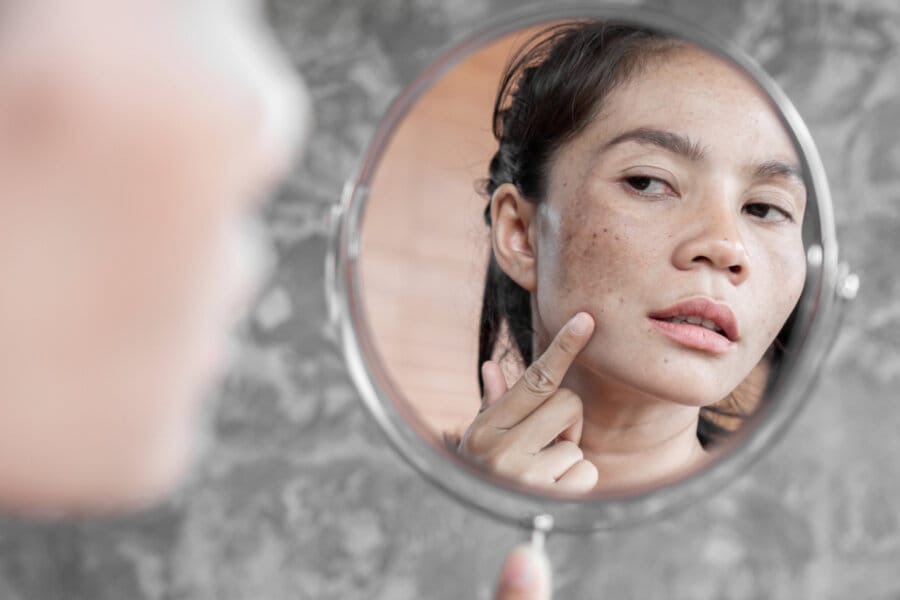
Summer Hyperpigmentation: Why Dark Spots Get Worse
Have you ever noticed that dark spots, uneven skin tone, or melasma seem to become more noticeable during summer?
You’re not imagining it.
Summer brings increased exposure to sunlight, heat, and inflammation—all of which can encourage the skin to produce more melanin. For anyone already prone to hyperpigmentation, even everyday activities such as driving, walking outdoors, gardening, or spending an afternoon at the beach can make existing discoloration appear darker.
The answer isn’t to aggressively exfoliate your skin all summer. Understanding what triggers pigmentation—and protecting your skin from those triggers—is an important part of maintaining a brighter, more even-looking complexion.
What Causes Hyperpigmentation?
Melanin is the natural pigment that gives our skin, hair, and eyes their color. It also plays an important role in helping protect the skin from ultraviolet radiation.
Hyperpigmentation occurs when certain areas of the skin produce more melanin than surrounding areas.
This can appear as:
• Sun spots
• Post-acne marks
• Uneven skin tone
• Melasma
• Areas of discoloration following irritation or inflammation
Several factors can contribute to pigmentation, including sun exposure, hormones, inflammation, skin injuries, acne, and genetics.
Why Does Hyperpigmentation Get Worse During Summer?
UV exposure is one of the strongest triggers for melanin production.
When your skin is exposed to ultraviolet radiation, melanocytes—the cells responsible for producing melanin—increase pigment production as part of the skin’s natural defense response.
If you already have areas of excess pigmentation, those areas can become more noticeable after repeated sun exposure.
And it isn’t only a day at the beach that matters.
Daily activities such as driving, walking the dog, sitting near sunny windows, or running errands can contribute to cumulative UV exposure.
Heat Can Be a Trigger Too
This is especially important for people dealing with melasma.
Sunlight isn’t the only factor that can make pigmentation more noticeable. Heat can also contribute to inflammatory and vascular signaling in the skin, which may aggravate melasma in susceptible individuals.
That means hot summer days, prolonged outdoor activities, and other sources of excessive heat may be problematic even when you’re diligent about sunscreen.
For melasma-prone skin, keeping the skin cool and minimizing unnecessary inflammation can be just as important as choosing the right brightening products.
Inflammation Can Leave Pigment Behind
Have you ever had a blemish disappear only to leave a dark mark for weeks or months?
This is called post-inflammatory hyperpigmentation (PIH).
Acne, picking at blemishes, irritation, aggressive exfoliation, and even certain skin treatments can trigger inflammation. As the skin heals, excess pigment may remain behind.
This is one reason we don’t believe that stronger is always better.
When treating pigmentation, protecting the skin barrier and controlling inflammation are important parts of achieving a more even-looking complexion.
How to Protect Your Skin From Summer Hyperpigmentation
Consistency is one of the most important parts of managing pigmentation.
During summer:
• Apply broad-spectrum sunscreen every morning.
• Reapply sunscreen when spending extended time outdoors.
• Wear a wide-brimmed hat when possible.
• Seek shade during prolonged outdoor activities.
• Avoid picking or squeezing blemishes.
• Don’t over-exfoliate your skin.
• Keep the skin hydrated and support a healthy skin barrier.
• Use antioxidants and brightening ingredients appropriate for your skin.
If you’re prone to melasma, a tinted sunscreen containing iron oxides may provide additional protection against visible light, which can contribute to pigmentation—particularly in darker skin tones.
Ingredients That Can Help Brighten Uneven Skin Tone
The best brightening routine doesn’t necessarily contain the strongest products. It contains ingredients that work together while keeping your skin healthy.
Depending on your skin, helpful ingredients may include:
Vitamin C – Provides antioxidant protection and helps brighten uneven-looking skin.
Niacinamide – Supports the skin barrier while helping improve the appearance of uneven pigmentation.
Alpha Arbutin – Helps reduce the appearance of excess pigmentation.
Mandelic Acid – Provides gentle exfoliation and can help improve uneven tone and texture.
Retinoids – Encourage healthy skin renewal and may gradually improve discoloration.
The right combination depends on your skin type, sensitivity, and the cause of your pigmentation.
Why Treating Pigmentation Takes Patience
Pigmentation usually develops gradually, and correcting it also takes time.
One aggressive treatment cannot erase years of sun exposure—and attempting to remove pigmentation too quickly can sometimes cause irritation that makes discoloration worse.
At Personalized Skin Care, we take a more balanced approach.
Our goal is to gradually improve uneven pigmentation while maintaining hydration, reducing unnecessary inflammation, and protecting the skin barrier.
Professional treatments combined with consistent home care and sun protection generally provide the best long-term approach.
Professional Care for Hyperpigmentation
Not every dark spot should be treated the same way.
Before recommending a treatment, we consider your skin type, sensitivity, lifestyle, current skincare routine, and the type of discoloration you’re experiencing.
Depending on your skin’s needs, a customized treatment may incorporate:
• Gentle exfoliation
• Brightening serums
• Antioxidants
• LED therapy
• Hydration and barrier support
• Customized home-care recommendations
For stubborn pigmentation or suspected melasma, we may also recommend evaluation by a dermatologist when appropriate.
Lorena’s Professional Tip
When clients see pigmentation getting darker, their first instinct is often to exfoliate more or reach for stronger products. But irritated skin can create even more inflammation. With pigmentation, consistency, sun protection, and maintaining a healthy skin barrier are often more important than being aggressive.
— Lorena Coello
Master Esthetician
Personalized Skin Care
Did You Know?
☀️ UV exposure can darken pigmentation even when you don’t develop a sunburn.
🔥 Heat may aggravate melasma in people who are susceptible to it.
🚗 Everyday exposure while driving and running errands contributes to cumulative sun exposure.
🧴 Tinted sunscreen containing iron oxides can help protect against visible light as well as UV when paired with broad-spectrum protection.
💧 Maintaining a healthy skin barrier is an important part of a successful brightening routine.
Serving clients since 1993, Personalized Skin Care Facials Fullerton—part of PSC Wellness—specializes in corrective, results-driven facials designed to transform your skin.
We focus on customized treatments based on your skin’s condition, not just your skin type. Whether you’re dealing with acne, aging, sensitivity, or compromised skin, our approach is centered on restoring skin function, strengthening the barrier, and delivering visible results—often in just one session.
As part of PSC Wellness, we take a more complete approach to skin health, combining advanced treatments with long-term skin solutions tailored to you.
Personalized Skin Care is not a one-size-fits-all experience—it’s a targeted skin solution built on over 30 years of expertise.
facials Fullerton, acne facial, anti-aging facialLearn more about our Facials:
Other Articles:
Summer Skin Wellness
• How to Apply Sunscreen Correctly: 5 Common Mistakes to Avoid
• Summer Dehydration: Why Your Skin Feels Tight Even When It’s Oily
FAQ
Why do my dark spots get darker during summer?
Increased UV exposure stimulates melanin production. Existing areas of hyperpigmentation can therefore become darker or more noticeable during summer.
Can sunscreen prevent hyperpigmentation?
Sunscreen cannot guarantee that pigmentation won’t occur, but consistent broad-spectrum sun protection is one of the most important ways to help prevent existing discoloration from becoming darker and reduce new UV-related pigmentation.
Why does my melasma get worse when it's hot?
Melasma can be influenced by more than UV exposure. Heat, visible light, hormones, and inflammation may contribute to flare-ups in susceptible individuals.
Should I exfoliate more during summer to remove dark spots?
Usually, more isn’t better. Excessive exfoliation can irritate the skin and trigger inflammation, potentially making pigmentation more noticeable. Your exfoliation routine should be appropriate for your individual skin.
Can acne cause hyperpigmentation?
Yes. Inflammation following acne can leave behind post-inflammatory hyperpigmentation, particularly in medium to deeper skin tones. Avoiding picking and controlling acne early can help reduce the likelihood of lingering marks.
Can professional facials help with hyperpigmentation?
Professional skincare treatments can help improve the appearance of uneven tone through appropriate exfoliation, brightening ingredients, hydration, and barrier support. Persistent or changing pigmentation should be evaluated by a medical professional.




Brighter Skin Starts With Understanding Your Skin
Hyperpigmentation isn’t always caused by the same thing, which is why we don’t believe in a one-size-fits-all approach.
At Personalized Skin Care, we’ll evaluate your skin and create a personalized treatment and home-care plan designed to address uneven tone while supporting healthy skin.
Schedule a personalized skin consultation and discover the right approach for your skin.
0 Comments